Industrial air compressors are machines designed to compress ambient air to higher pressures, storing it as potential energy for various applications. They work by mechanically reducing the volume of air, using power sources such as electric motors or internal combustion engines.
Industrial air compressors are classified into two main types: positive displacement (e.g., reciprocating and rotary screw compressors) and dynamic (e.g., centrifugal and axial compressors).
These devices are essential in industries like manufacturing, construction, food processing, and pharmaceuticals, providing reliable compressed air for tools and processes. They vary in design (stationary or portable), pressure capacities, and lubrication types (oil-free or oil-lubricated), tailored to specific industrial needs.
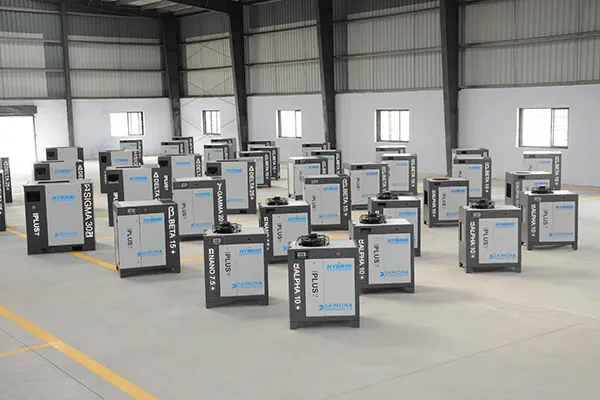
There are some important factors you need to take into account while buying air compressor are the size, and type of compressor whether it require oil free or oil lubricated varieties. Our offered Industrial air compressor is highly demand in the market due to stable air pressure, energy saving, high efficiency, low maintenance, modular design and long life. All our offered products are designed using the quality tested materials. Moreover, we offer this industrial air compressor at a very affordable rate.
An industrial air compressor is a robust mechanical device designed to convert power (using an electric motor, diesel, or gasoline engine) into potential energy stored in pressurized air. It is engineered for heavy-duty, continuous operation in various industrial environments.
The two main categories are positive displacement compressors (such as reciprocating piston compressors and rotary screw compressors) and dynamic compressors (such as centrifugal and axial compressors).
They are widely used in manufacturing, automotive, pharmaceuticals, food processing, construction, textiles, and chemical plants to power pneumatic tools, control systems, and process operations.
Key factors to consider include the required air pressure (PSI), air volume flow rate (CFM), the duty cycle (continuous or intermittent), air quality needs (oil-free vs. lubricated), and power efficiency.
Routine maintenance prevents unexpected downtime, ensures optimal operating efficiency, extends the equipment's lifespan, and maintains air quality by replacing filters, checking lubrication, and monitoring for leaks.